
Caution/Warning Signs
Caution and warning signs for everyday workplace hazards, from wet floors and steps to moving vehicles and overhead obstructions. Yellow BS EN ISO 7010 triangles with clear supporting text, printed on self adhesive vinyl.


£2.46 ex VAT

£2.89 ex VAT

£7.63 ex VAT

£7.63 ex VAT

£7.63 ex VAT

£2.46 ex VAT

£7.63 ex VAT

£7.63 ex VAT

£2.46 ex VAT

£2.46 ex VAT

£2.46 ex VAT

£2.04 ex VAT

£2.04 ex VAT

£2.04 ex VAT

£2.89 ex VAT

£7.63 ex VAT

£2.89 ex VAT
£7.63 ex VAT

£7.63 ex VAT

£2.89 ex VAT

£2.89 ex VAT

£2.46 ex VAT

£2.46 ex VAT
£2.04 ex VAT

£2.46 ex VAT

£7.63 ex VAT

£2.46 ex VAT
£2.46 ex VAT

£2.89 ex VAT

£7.63 ex VAT

£2.46 ex VAT

£2.46 ex VAT

£5.35 ex VAT

£9.53 ex VAT

£17.86 ex VAT

£4.18 ex VAT
£9.53 ex VAT

£7.75 ex VAT

£9.53 ex VAT

£10.42 ex VAT
£7.75 ex VAT

£4.18 ex VAT
£10.42 ex VAT

£9.53 ex VAT

£17.86 ex VAT

£10.42 ex VAT

£9.53 ex VAT

£10.42 ex VAT
Caution or danger?
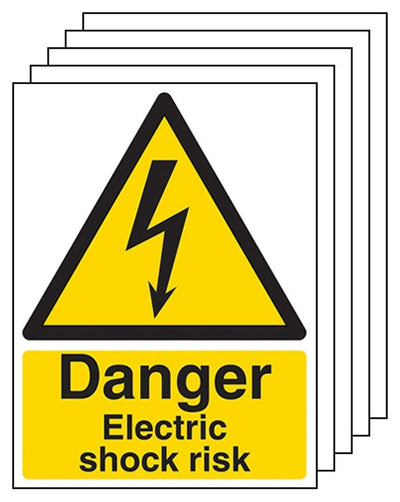
Both caution and danger signs use the yellow warning triangle. Caution is generally used for hazards that could cause injury, while Danger signals a risk of serious injury or death, such as high voltage. Choose the wording that matches the level of risk identified in your risk assessment.
Popular caution signs
- Caution slippery surface and wet floor signs.
- Mind the step, mind your head and trip hazard signs.
- Caution vehicles operating and reversing vehicle signs.
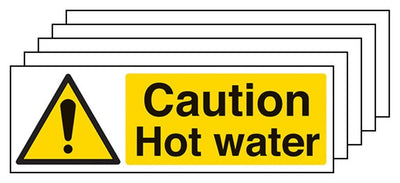
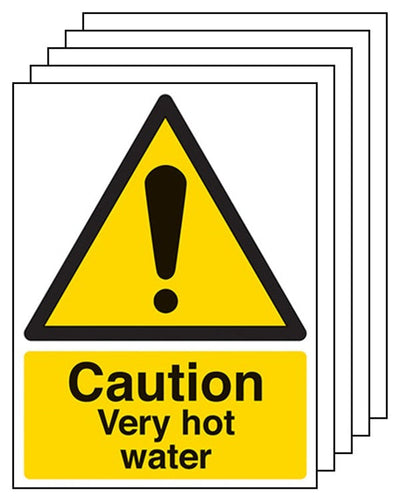
- Caution hot surface and hot water signs.
For hazard-specific ranges, see our electrical, chemical and forklift warning signs.
Caution and warning signs buying guide
Symbol or wording?
A yellow triangle with a black symbol is the standard warning sign, and the symbol tells people what the hazard is without needing words. Add wording such as 'Caution wet floor' when you want to be specific, or when you want a sign that says exactly what to do.
Put it before the hazard, not at it
People need time to react. Place warning signs where they are seen before the hazard is reached, at eye level for most signs and nearer the floor for wet floor and trip hazards. For a temporary hazard such as a freshly mopped floor, use a freestanding sign and take it away when the hazard ends.
Size and viewing distance
A long-standing rule of thumb in European safety sign guidance is that a sign's area in square metres should be at least the viewing distance in metres, squared, divided by 2000. A sign to be read from 10 metres needs about 225 x 225 mm.
Common mistakes
- Relying on a sign when the hazard can be removed or guarded.
- Putting up many warnings in one place until none stand out.
- Leaving a sign up after the hazard has gone.
Can a warning sign replace a barrier or guard?
No. Signs warn people about risks that remain once you have done everything else you reasonably can. Look at your risk assessment first, then sign what is left. See all safety signs for the other sign families.